samedi 1 mai 2010

WEATHER


Coldest:
-5"C <23°F) at
Loch Glascarnoch
(Wester Ross) on
Mon 19th
Sunniest:
13.9hrs at
Coleshill
(Warwicks) on
Sat 17th
Warmest:
20°C (68°F) at
Olympic Park
(London) on
Sun 18th
For the week that was:
High pressure maintained generally dry weather over large parts of
the country throughout the week, and most places enjoyed long sunny
periods and above average daytime temperatures, although nights were
often cold with local frost. Afternoon highs were typically between 15 and
19°C. However, a southward-moving cold front brought rain to Scotland
on Sun, and to parts of northern and eastern England on Mon, followed
by a sharp drop in temperature in northern districts and scattered snow
showers in the far north of Scotland.
The ash ejected from the Icelandic volcano from Thur onwards spread
widely across northern and central Europe, extending beyond the Urals
by Mon, and reaching Newfoundland and Labrador in the other direction,
but it was limited to narrow layers away from northwest Europe. It was
very warm in Spain and France from Fri onwards, reaching 27°C in Spain
by Tue, and 25°C over much of southern and southwestern France.

The great English novelist you've probably never heard of


Despite receiving a string of rejection letters, the first at the age of 12, novelist Stephen Benatar persevered, and eventually the marketing techniques he'd learned as a cleaning product salesman paid off. It only took 30 years, he told Cosmo Landesman


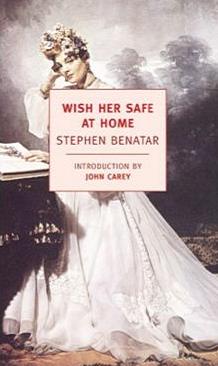
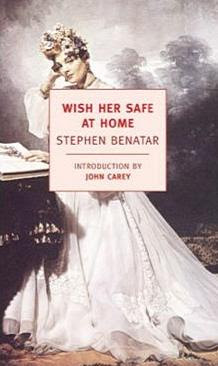
I first met Stephen Benatar in a Waterstonc's bookstore in north London. This well- dressed man in a fedora came up to me and said very softly: "Hello, I'm signing copies of my novel. Would you be so kind as to take a look?" And before I could say: "No, bugger off!", he had slipped a copy of Wish Her Safe at Home into my hands and disappeared. "Oh dear," I thought, "another one of Brit-lit's deluded losers!" I've met so many in my time - writers who have measured out their lives in rejection slips; who have written dozens of well-reviewed novels that sank without trace. So I bought the book in much the same spirit as I would buy a copy of The Big Issue: it was a pity purchase.


It just goes to show that you should never judge an author by their hat or their hustle. For I quickly discovered that Benatar is not one of the deluded; he is one of the talented. He writes wonderfully about failed lives, missed opportunities and the seductive dreams of second chances. Benatar's terrain, writes the academic Gillian Carey, is "the weird hinterland of ordinary life


where eccentricity shades into the bizarre, battiness into delusion and dementia". Wish Her Safe at Home is a haunting story about a genteel woman called Rachel Waring who inherits a Georgian house in
Bristol and slowly goes mad. Professor John Carey, an esteemed reviewer for The Sunday Times, has called it a "masterpiece". Doris Lessing has praised it as "a most original and surprising novel". And various celebrities - Emma Thompson, Joan Bakewell and Joanna Lumley - have declared themselves fans.
Now, after 30 years of obscurity, Benatar is on the brink of a breakthrough. The New York Review of Books has published Wish Her Safe at Home in its Modern Classics series in the US, and is now issuing a British edition. And yet Benatar is still engaged in a one-man crusade to find readers for his books, approaching strangers and asking them would they "care to look at this". A neat, well-preserved man of 73, Benatar has a whiff of old-world civility that comes off him like cologne. Talking to him is like taking tea with a vicar; you feel you had better not swear. But once he starts to tell me about the various "dalliances" he had with men during his marriage, I relax.
The odd thing about Benatar is that he has the shameless, steely determination of a hustler, but the courteous good manners of a gentleman. I le is former umbrclki salesman, English teacher (at the University of Bordeaux) and successful rep for the "miracle" cleaning product Swipe - and he has been doing his own peculiar form of book signings for the past 25 years. And not just in bookstores. He has approached strangers on buses; he has


knocked on the doors of neighbours; he has invaded pubs, betting shops, estate agents and even the local undertaker.
So why does he do it? It's not for the money. He earns roughly £l for each copy of a book he sells. He's not in it for the fame. "No, I have no desire to be recognised on the streets," he says. He does it for one simple reason: he wants to be read. "I know some people might think that I'm shameless, a bit too pushy, bin whai are you supposed to do? Nobody knows who I am. If I didn't go out there and promote my books, they'd just... die. My greatest fear is that my life's


work will just vanish. I want to he road in the future in the same way that I read Jane Austen today."
High hopes, dead novels, cruel rejection slips, good reviews and bad sales - Benatar has known the lot. All over Britain there are Benatars - men and women who, despite critical indifference and


the UK can't make a living at it (the average income was £12,330 for the good year of 2004-05). They will watch their careers and dreams crash and burn or just slowly crumble with age.
Faced with such failure, some writers turn to drink, while others - such as John Kennedy Toole, the author of the posthumously published, Pulitzer-prize-winning A Confederacy of Dunces - choose suicide. But not Benatar. This is a man who for over a quarter of a century looked literary failure in the face - and then decided to fight back. He got his first rejection in 1949 at the age of 12 when he sent a short story to the London Evening Standard. At 19 he had his first novel, A Beacon in the Mist, rejected. Over the next two decades Benatar wrote 11 novels. He sent them in to publishers, and they sent them back with a curt "Thank you, but..." or "Not one for us". By 1980, Benatar, who was by then married with four children and teaching English to support his family, decided that if he couldn't find a publisher for his latest novel. The Man on the Bridge, he would pack it in. It is set in London in the 1950s and tells the story of an ambitious young man on the make who realises that he is gay and has an affair with a rich and fashionable gay painter.
Since he didn't have an agent, Benatar's family all prayed to God to find a publisher for Dad's novel. Well, He must truly move in a mysterious way, because that's what happened. The novel was


plucked from a slush pile at Harvester, who decided to publish it and, what's more, gave Benatar the legendary Catharine Carver - who was Saul Bellow's editor - to help get it in shape. By now, Benatar was 44. "It was so exciting. When I got the news, I went weak at the knees. I really believed that my career was about to take off. I even sent a copy of the book to Clint Eastwood for him to make into a film. He would have been perfect as the gay painter, but for some reason I never heard from him."
So what happened next? "Oh, not much. A few good reviews, but it didn't sell well. But by then I'd finished my next novel. Wish Her Safe at Home." With its publication in 19X2 by The Bodley Head, it really did seem that Benatar was on his way. The novel had wonderful reviews and was the runner-up for the James Tait Black Memorial Prize. Then, again, nothing. The family stopped praying. The rejection slips kept coming. By the end of the 1980s Benatar had written 15 novels - but only four were published.


Then he wrote Such Men Are Dangerous, and nobody wanted it, so he did something extraordinary: he persuaded his local council - Scunthorpe - to publish it. A local Tory councillor protested: "It's the duty of the council to dispose of rubbish - not publish it!"
I ask Benatar if he was downhearted during this period. "No, I never felt downhearted about the failure of any of my books. I have wondered why they haven't been taken up by readers. The thing is, I love to write." For decades he has had to watch many writers with far less ability than his own rise effortlessly to the top. Yet he shows no trace of resentment. "No, I don't feel any bitterness or envy of successful authors. Honest. People like Ian McEwan, I don't envy him because I don't rate his work."
The 1990s proved a tough time for Benatar. His marriage of 29 years ended when he decided to come out as gay - though he insists that he had told his wife, Eileen, of his gayness before they married. She has a different version of events: "I think there was a misunderstanding. I was rather naive and thought he had a few schoolboy crushes on men. I didn't think he was fully gay."
Then, in 2007, Benatar tried to get Wish Her Safe at Home republished as a Penguin Classic. They were interested but asked if he could get someone famous to write an introduction. So Benatar got John Carey to write a glowing introduction - yet still Penguin turned him down, and so did 36 other publishers. It is at this point that most writers would just quit. But Benatar decided to set up his own imprint - Welbeck Classics - to republish his books, and to take on the task of selling them himself. In 2007 he printed 4,000 copies of Wish Her Safe at Home, and he has sold them all personally. Bookstore managers


who have seen Benatar in action arc astounded by his success. Andrew Raymond from Waters tone's in Staines says: "He has a charismatic presence that people like. He sells around 50 books every time he comes in, which is a fantastic achievement for an unknown author." "My record is 128 books in one day," says Benatar proudly. "I actually outsold J.K. Rowling and John Grisham that day. But then, I was there, and they weren't."
Central to Bcnatar's appeal is the fact that people feci that they have actually met the author, because he talks to them, not only about his book but about their lives. Usually you wait in a queue to have your book signed, exchange a few words with the Circat One - and off you go. Benatar knows that to sell his book he has to sell himself, and it works. As one woman wrote in an online discussion: "Last week I bought a book in Harrods and met the author - what a lovely man! Very charming and beautifully dressed - you have to admire a man in a neckerchief."


"I'm very careful not to hassle anybody,*' he tells me. "I always give them my book and quickly walk away so they don't feel there's any pressure or they're being watched." Various celebrities have been subject to the Benatar soft sell. He slipped his novel through the letterboxes of Hmma Thompson ("she was terribly nice and wrote me a lovely note") and Doris Lessing ("so very kind with her praise").
Benatar finally got his lucky break last year. I le had held a party at a bookshop and the next day he went back to pick up some leftover wine. "As I was pushing a trolley of wine, a man came in the shop and I ran into him," he says. "So I apologised and said: 'Would you mind having a look at my book while you're here?'" It turned out that the man was Edwin Franks, the managing editor of the publishing section of The New York Review of Books. He bought a copy of Wish Her Safe at Home. "I read the book straight away and was knocked out. It's not every day you find a neglected classic from an Englishman who is still alive. Everyone in the office read it and was just as excited as I was." A few weeks later, Benatar got the news for which he had been waiting for nearly two decades: a prestigious publisher wanted to publish his book both here and in America. Now The New York Review of Books has whisked Benatar off to New York to do readings and to try his brand of self-promotion on the Americans.
Rachel Waring, the loopy heroine of Wish Her Safe at Home, says at one point: "Wouldn't it be fine if we all had second chances?" Benatar's work illustrates the poignancy of that impossible dream; but paradoxically his life teaches a very different lesson: don't let your dream die. One day it might just come true.

Market summary

Key numbers for investors


Best and worst performing shares


Following the Footsie

Directors' dealings


Debenhams


New chairman, Nigel
Northbridge, is a tobacco
industry veteran much in
demand on UK corporate
boards. His opening £76,940
buy coincides with a rise in
trading figures, and the
purchase of Danish store
chain, Magasin du Nord.

Who's tipping what


Advanced Medical Solutions


The Times

This wound-care specialist has good prospects. Its key product, I.iquiBand (a sort of medical superglue), now dominates the US market; it is cash secure and plans to start paying dividends. Buy. 42p.


ATH Resources


The Independent Stronger coal prices boosted shares in this UK miner by 60%. The recent dip - sparked by missed production targets - is a real buying opportunity. The dividend is still a healthy 7.7%, with no hint of a cut. Buy. 77p.


JD Sports Fashion

The Independent Buoyant demand for own- brand labels such as McKenzic and Cabrini, and exclusive Nike and Adidas products, is giving this retailer plenty of momentum. Profits have surged, yet it still looks cheap. Buy. 715p.


JP Morgan Indian IT

The Daily Telegraph This fund invests in major Indian companies focused on finance, technology, energy and industry: shares are up 91% in the last year. A good long-term play on India's emergence as a global economic power. Buy. 427.5p.


Psion
The Sunday Times Unlike rival Palm, Psion survived the smartphone revolution by reinventing itself as a "rugged" handset-maker - a niche but solid market. It now has £45m in the bank. Shares have fallen this year, "undeservedly". Buy. 83.5p.


William Sinclair


The Independent The Government has paid William Sinclair (known to gardeners for brands J. Arthur Bower's and New Horizon) £9m to cease environmentally unfriendly peat harvesting. Sales in its non-peat compost are soaring. Buy. 112.5p.


.

and some to sell


Aer Lingus

Shorts
Irish airline Aer Lingus's share price has risen 20% since November on the back of a restructuring plan. But the recovery story is now discounted. This week's Might cancellations haven't helped. Sell. €0.76


JJB Sports


Shares
Rumour has it that this beleaguered sports retailer is cutting orders. Brokers forecast ongoing losses and ill health has forced exec- utive chairman Sir David Jones to take a back seat. Sell. 22.5p.


Ladbrokes


The Daily Telegraph The Grand National result is the least of Ladbrokes's problems. Panmure Gordon reckons shares have priced in too sharp a turnaround in its retail and e-gaming operations. A lot rides on the arrival of a new CEO. Sell. 161 p.
Marks & Spencer
The Daily Telegraph Credit Suisse is gloomy about MocS. Sales figures look to have improved but are unlikely to result in material changes to profit. The staff bonus pot is high and store modernisations mean bigger operating costs. Sell. 378p.


Morgan Crucible

The Daily Telegraph This defence and aerospace supplier has performed superbly. Results indicate its main markets have stabilised, and there may be further gains. But shares are unlikely to match their recent performance. Sell. 218.6p.


QinetiQ

Investors Chronicle Defence company QinetiQ's fundamental problems seem intractable. There is conflict with unions, and the threat of prohibitively expensive redundancy pay-offs is still unresolved. Sell. 136p.

No laughing matter

If you want to get to grips with the culture that spawned the Goldman affair, the "very best book" is Michael Lewis's The Big Short, a new, blistering indictment of the way Wall Street does business, says John Lanchester in The Guardian. The investment banks emerge as particular villains, while the heroes are a bunch of mavericks who diagnosed the credit bubble early, and bet hugely against it. But Lewis clearly shows how, at the peak of the derivatives fiesta, "lines between right and wrong were repeatedly crossed". The SEC lawsuit against Goldman will turn on the much narrower issue of whether "lines between legal and illegal" were also crossed.

Lewis deftly reveals "the full, amoral horror of an out-of-control financial system in the hands of greed-driven sociopaths", agrees Martin Vander Weyer in Spectator Business. And this is a much livelier read than Gregory Zuckerman's The Greatest Trade Ever. But the key question for Lewis devotees is whether The Big Short can match Liar's Poker - his hugely entertaining 1989 account of his career as a Salomon bond salesman. The new book demonstrates his "finely tuned ear for the trading floor", but its cast pales in comparison with the grossly unattractive, but richly comic "Big Swinging Dicks" at Salomon. Lewis tells a colossal story, but he can't quite re-capture the magic. " The Big Short just isn't funny."

Issue of the week: The SEC vs Goldman Sachs


The action against Wall Street's sharpest bank has given fresh impetus to financial reform, but do the charges stack up?


Goldman Sachs chief, Lloyd Blankfein, once admitted to spending sleepless nights pondering the impact of unforeseen events. The Securities & Exchange Commission's interest in the bank's Abacus CDO was nothing new, said Andrew Leonard on Salon.com: the US markets watchdog first noted "potential improprieties" relating to it in August 2008, and Goldman responded in depth. But what stunned the bank's top brass was the SEC's decision to launch legal proceedings without first trying to reach a settlement. It was the right thing to do. It may be years before we get a judgement on this case, but the threat of a "wrathful" SEC will at least have the rest of Wall Street "looking over its shoulder".
The fraud charges hinge on the key distinction of whether the investors who lost $ 1 bn buying Fabricc Tourre's exotic package of mortgage securities were "fools or victims", said Hugo Dixon on Breakingvicws.com. The SEC's allegation is that Goldman marketed its "synthetic CDO" without revealing the involvement of John Paulson's hedge fund to investors - notably the German bank 1KB and the Dutch bank ABN Amro (later bought by the Royal Bank of Scotland). Goldman's defence is that everyone in the market knew the portfolio would attract both long and short investors, and that an independent agent, ACA, had the final say
in its content. What's more, Goldman itself took hefty S90m losses because it invested alongside its banker clients. That's probably the biggest stumbling block to the SEC case, said John Gapper in the FT, particularly since there's only "patchy" evidence that investors were "actively misled". One thing's certain: this is no open-and-shut case. The SEC will have its work cut out nailing Goldman.
Maybe, said Alex Brummer in the Daily Mail. But Goldman Sachs "will have a hard time defending itself in the court of public opinion". On too many occasions, the actions of this bank - whose tentacles reach
deep into government and central banking: arQund fhe WQrld _ havc ^ mora|,y
questionable; not least its habit of "stacking the odds in its favour" when dealing with clients. Goldman's platinum-plated reputation has brought it record profits. But it has been "too clever by half". Unless it moves rapidly "to cleanse the taint of dodgy dealing... it will pay a very high price indeed. And there will be many who will say it deserves to." The best outcome from this case, said Paul Krugman in the New York Times, is that it will hasten not just financial reform (much needed though that is), but also a change in attitude. "Much of the financial industry has become a racket - a game in which a handful of people are lavishly paid to mislead and exploit." It's time to put an end to it.

City profiles

John Paulson
It was famously "the greatest trade ever". But the more details we learn about the alleged Goldman Abacus fraud, the more "dog-eared" Paulson's multi-billion bet against subprime mortgages begins to look, says Richard Beales on Reuters Breakingviews.com. Paulson appears to have gone to ground. But, despite leading a playboy lifestyle in his younger years, he's never been exactly charismatic, remarks Heather Stewart in The Observer. One of his few distinguishing characteristics is that, despite his great wealth, he still likes to travel by train. A long journey may lie ahead. Although he hasn't been charged with any wrongdoing, he may yet face "serious legal consequences", says former IMF chief economist Simon Johnson on The Huffington Post. "John Paulson needs a good lawyer."

Back in early 2007, the self- styled "Fabulous Fab" was feeling pretty pleased with himself, says the FT. Not only was the 28-year-old French- man working for Goldman Sachs in New York, but he'd become a high-flying whizz in the booming field of CDOs. "The whole building is about to collapse anytime now," he emailed his girlfriend at the time. "Only potential survivor the fabulous Fab, standing in the middle of all these complex, highly leveraged exotic trades he created without necessarily understanding all the implication of these monstruosities [sicj!!!" Tourre now looks "rather less heroic". Goldman is standing by its man, for the moment, notes The Daily Telegraph. But he has been stripped of his licence to operate in the City of London.

Commantators

Keeping it in the family

Seven years after the death of Gianni Agnelli, the leadership of Fiat is back in
the hands of "the first family in the Italian motor industry", says Robert Lea in The Times. The carmaker's new chairman is John "Jaki" Elkann, an American-born grandson of Agnelli - the godfather of the post-war Italian industrial economy. Whether or not Elkann possesses his grandfather's political talents, he can't be faulted for
the thoroughness of his 13-year apprenticeship as heir apparent, which included a stint making headlights in Poland. He also ran the Agnelli family investment empire, which includes Juventus football club, and the Corriere della Sera and La Stampa newspapers.


IMF bank reforms need more welly
Nils Pratley
The Guardian


The International Monetary Fund seems to have a sense of humour, says Nils Pratley. Its proposed levy on excessive profits and pay is to be called the "financial activities tax", or FAT for short — a nod surely to the many fat cats still purring around the banking system. The fund has certainly picked a good moment to unleash its proposals: Goldman Sachs has just announced a 90% leap in profits and restored its bonus pool to 43% of revenues; other banks will no doubt follow. The IMF's second measure - dubbed the "financial stability contribution" - is a levy to pay for the cost of future government support for the financial sector. But here again there is a twist: insurers, brokers and hedge funds could also be included. "Unfortunately for them, there has to be a mechanism to prevent banks from dressing up in new clothes to dodge taxes." This report is "a big step in the right direction", but solving the "too big to fail" problem requires more than heavier taxation. We need real structural reform to accompany these tax changes.


Aviva hammers its nail into the pensions coffin
David Wighton
The Times


The not-so-slow death of the final-salary pension scheme continues apace, says David Wighton. All but a handful of large employers in the private sector have now closed their schemes to new recruits. "Now comes the more drastic phase two: closing schemes to everybody." Aviva (the former Norwich Union) is the latest to go the whole hog, disadvantag- ing more than 7,000 of its longest servers. As one of the leading players in Britain's pensions industry, Aviva's decision to pull the plug is particularly poignant. Among the big beasts of the financial services industry, only Barclays had gone this far - until now. Aviva's scheme was eye-poppingly generous: employees made no contributions, retirement was at 60, and benefits were clocked up at speed. Terms were recently toughened up, but even then its pension deficit kept ballooning. Meanwhile, newer recruits on inferior deals could only look on in envy. The new arrangement will certainly be fairer. "But capitulation by a company of Aviva's stature can only hasten the coming stampede.**


Black Swan is back with a vengeance

Allister Heath
City A.M.


One of the most powerful lessons in life is that unexpected events always tend to derail even the best and most carefully thought- out plans, says Allister Heath. This week we saw three major disruptions to received wisdom, and all will have severe consequences. The first was Nick Clcgg's victory in the first election debate, with all the implications that has for a hung parliament. The second was the "horrible realisation" that a volcano in Iceland could cripple the airline industry, disrupt freight and put in question the easy movement of people. The third was the SEC's decision to accuse Goldman Sachs of fraud - a move that "shattered the widely held view that a new, relatively reasonable settlement was going to be struck between politicians and the financial system". All these stories qualify as "Black Swan events", to use Nassim Taleb's phrase: they are unexpected events of large magnitude with important consequences. And in all three cases, "markets have been caught off guard - and have still not understood the magnitude of what is happening". When will we learn?

Seven days in the Square Mile

Tesco chief Sir Terry Leahy delivered an upbeat assessment of the economy, claiming he is confident that Britain "is out of recession and will stay out". But there was a further slew of worrying data. The ONS reported that unemploy- ment rose by 43,000 to 2.5m in the three months to February, bringing the jobless total to its highest since 1994. Mean- while, rising transport costs - notably the price of petrol - pushed inflation much higher than predicted by analysts. The consumer price index (CPI) shot up to 3.4% in February. The Retail Price Index (which includes housing costs) also rose sharply from 3.7% to 4.4%.
The Financial Services Authority said it would launch a formal inquiry into the activities of Goldman Sachs, following the US Securities Commission's decision to pursue civil charges of fraud. The case is likely to spark a wave of further litigation centring on the mis-selling of mortgage derivatives: the Dutch bank, Rabobank, accused Merrill Lynch of a similar misdemeanour. The IMF released proposals for two new international levies on banks, amid calls for a ban on the trading of "synthetic CDOs" at the heart of the Goldman case.
The International Air Transport Association reported that global airlines have lost about $1.7bn as result of the Icelandic volcanic eruption. At its height, the crisis hit almost a third of global flights. The OFT fined two tobacco groups and nine retailers a record £225m for cigarette price-fixing. Apple shares hit an all-time high after the company reported a 90% increase in Q2 profits.

The City: paradise for teenage boys Rosamund Urwin London Evening Standard


"The City is often made to sound like the fantasy workplace of a
L3-year-old boy," says Rosamand Urwin. No-one complains if
you look at porn at your desk; smutty comments and silly
nicknames are encouraged; and when the day's slog is over, "your
main concern is whether your £50 notes are best used for
snorting cocaine or for tucking into lapdancers' thongs". No
surprise, then, that two women demanding £3m from the
Japanese bank Nomura for unfair dismissal report that their
breasts were referred to as "honkers" and that they were told
they "belong at home cleaning floors". The tribunal ruled that
the remarks were only "trivial" banter and Nomura was cleared
of wrongdoing. It wasn't just banter, though: it was bullying, and
women are hardly the only ones who fall victim to such trading
room taunts. If you're young, ginger, fat or foreign - in fact, if
you have any distinguishing characteristic - you'll be picked on.
"Is the City still sexist? Sure, parts of it are, but it can be
everything-else-ist too."

Companies in the news...and how they were assessed

Eruption disruption: who pays?
I "If this continues, there won't be any more airlines left in J Europe, apart from Aeroflot," declared Russian Prime I Minister Vladimir Putin. He's not the only one warning of I bankruptcy, noted Sarah Arnott in The Independent. With J the number of airlines in distress already running some 40% higher than a year ago, insolvency specialist Bcgbics Traynor warns that the volcano could claim several victims. Big players, including BA and Lufthansa (which is reporting losses of €25m a day), appear to want it both ways. While keen to stress the resilience of their cash reserves to prevent a share-price rout, they're clubbing together to demand government help. "Eruption disruption" has sent passengers, tourists and the companies that carry them rushing to the small print of insurance policies and EU legislation, said Andrew Hill in the FT. Who will pay? The widely held assumption that "acts of God" invalidate claims is a myth, and many insurers will honour claims from individuals. But package tour operators and airlines arc largely uninsured for the cost of getting passengers home and putting them up in the meantime. Hence the campaign for Government subsidies. Whether it means higher insurance premiums or higher taxes, ultimately "the bill for EyjafjallajokulPs burst of bad temper will land in the lap of the hapless European consumer".


Tesco: trolley dash

"The grocer that goes on growing" is obsessed with finding out what its customers want and then giving it to them, observed Neil Collins on Reuters Breakingviews.com. And how. From dominance in groceries, Tesco has marched into elcctricals, clothes, toys and banking - and this week reported annual profits of £3.4bn. Tesco says it takes £ 1,700 a year from the average British household. But Sir Terry Leahy's world domination plans aren't doing too badly either, said Nils Pratley in The Guardian. Not all of their overseas adventures are unqualified successes: there are still hefty trading losses at Tesco's US Fresh &c Easy stores. But it's the "big-picture" Asian story that should get investors salivating. "In 10 years in Korea we've done what took 60 years in the UK," noted Leahy. Expect more of the same in China next. If Leahy is right about the world coming strongly into recovery, the next couple of years "could see an acceleration". Investors - homing in on slowing growth in the UK - made Tesco shares the biggest loser in the FTSE 100 on Tuesday. "They won't be on a one-, five- or ten-year view."


Royal Bank of Scotland: God's gift?
They'll be cheering on the US Securities &c Exchange Commission (SEC) on The Mound in Edinburgh. If the SEC makes its charges against Goldman Sachs stick, RBS - one of the biggest losers in the affair - stands a chance of recouping some of the £550m it forfeited, said Martin Flanagan in The Scotsman. No wonder RBS shares piled on healthy gains while those of other banks rumbled last week. Analysts suggested the Goldman debacle could be a "gift of God". Taxpayers should be cheering, too. Having risen above the 49.9p per share that the Government paid when it took an 84% stake, the stock is now "above break-even" mark. It is reckoned the taxpayer gains just over £900m for every penny gained above 49.9p. Analysts seem agreed that RBS is no longer a basket case - and is indeed "rather well capitalised", observed Dominic Rushe in The Sunday Times. No doubt politicians will be wondering "how long it will be before the state can realise some of its investment". They should hold their horses. With so much uncertainty in the banking world, "it's too early to start cashing in just yet".


Metro-Goldwyn-Mayer: Dr No
He might be one of Hollywood's "most bankable franchises", bur that hasn't protected James Bond from the ructions in the movie industry, said Matthew Garrahan in the FT. Continuing uncertainty over the future of MGM has forced producers to suspend making the 23rd movie in the series. It's the usual plot, said Richard Beales on Reuters Breakingviews.com. "MGM's woes stem from a 2005 leveraged buyout that saddled the company with too much debt." Its owners - a private equity-led consortium - have been trying to sell it since November, to no avail. MGM's lenders were unimpressed by a Sl.5bn offer from Time Warner, and a second proposal, led by film-making brothers Tony and Sir Ridley Scott, is now being considered. But it looks like MGM will be forced to sell off other prize assets, including its 4,000-title film library and even its signature "roaring lion", said The Daily Telegraph. Presciently, the villain in the 2006 update of Casino Royale was a rogue trader who shed tears of blood, noted Beales. Bond's recent brushes with the moneymen should supply plenty more inspiration.

The man who made Britain love computers


The man who made Britain love computers

Guy Kewney
1946-2010

Guy Kewney, who has died aged 63, was one of the UK's most influential IT journalists, said BBC Online. Sometimes referred to as "the man who made Britain love computers", he predicted the technology revolution in the very first issue of the magazine Personal Computer World (PCW), back in 1978. "From here on in," he wrote with remarkable prescience, "the history of the computer will be the history of society, not just of calculators." And throughout his long career as columnist and interviewer, he displayed the same uncanny knack of foretelling the technological future. It was Kewney, for example, who foresaw the dominance of Google from the moment its first, minimalist website appeared in the late 1990s. Yet by a quirk of fate, Kewney would achieve widest fame for an interview in which he didn't even participate. In 2006 he was due to speak to BBC News 24 about a legal wrangle between Apple and the Beatles, when, in an extraordinary blunder, another man - a Congolese job applicant named Guy Goma — was ushered on in his place. Goma's evident terror and meaningless replies to the presenter's questions on live TV became a YouTube sensation.
Born in South Africa, Kewney moved to Britain in the 1960s,

where he trained as a civil engineer, then worked as a programmer for English Electric Leo Mar- coni Computers. But his real gift was for journal- ism, said Kelvyn Taylor on Computeractive.co.uk. In his influential Newsprint column in PCW, or in publications such as PC Dealer and PC Magazine, he would come to the rescue of the general reader by "peeling away the obscuring layers of technology". In person he was eccentric - he habitually wore socks and sandals - but that only added to his charm, said Manek Dubash on The Register, as did a phenomenon that came to be known as the "Kewney Chaos Field"- an unknown force that prevented any piece of technology ever working in Kewney's hands.
Yet there was nothing clumsy about his interviews, said Dubash. With unfailing politeness, he would always ask just the right question, leaving respondents squirming and often revealing far more than they intended. (Yet some relished his directness. During the time he sold computers, Alan Sugar used to say that Kewney was the only journalist he'd speak to.) Since being diagnosed with cancer last year, Kewney documented his struggle with the illness on his blog with typical humour and insight. He is survived by his wife Mary and their two daughters.

Polish president who governed with his twin brother


Kaczynski 1949-2010
Poland's late president. Lech Kaczynski, had a lifelong obsession with the tragic history of his country, said The Guardian. Born in a Warsaw still racked by the depredations of the Second World War, he was brought up by his parents to sing the national anthem - sometimes known as Poland Is Not Yet Lost - every night after saying his prayers. Jailed during the Cold War for his dissident activities, he went on in later life to hound those he believed had collaborated with the communists. One of the defining moments of his three-year stint as mayor of Warsaw was the opening in 2004 of the Museum of the Warsaw Uprising, which he had promoted. And by a malign coincidence, it was while

Kaczynski was on his way to commemorate one of his nation's worst catastrophes, the murder of thousands of Poles at Katyn in Russia in 1940, that he was killed in a plane crash along with 95 others, including the governor of Poland's central bank, the deputy speaker of parliament, the head of national security, 15 MPs and his own wife, Maria.
The son of an engineer. Lech Aleksander Kaczynski was born in 1949, shortly after his identical twin, Jaroslaw. (In later life, they could often only be told apart by the mole on Lech's left cheek.) The pair had a moment of early fame in 1962 when they starred in the film The Two Who Stole the Moon. Yet "the swotty duo had little in common with the scamps they portrayed", said The Economist. Both were highly academic, and Lech became a respected professor at Gdansk University, specialising in labour law. He was then chosen to act as adviser in the disputes between the unions and the state in the 1970s and 1980s, disputes that culminated in the rise of the Solidarity movement and the fall of Communism in Poland. The struggle brought him together with Solidarity's leader. Lech Walesa (who had been one of his pupils in Gdansk), and Kaczynski went on to serve as security minister when Walesa became president. In 1992, however, he resigned


after the pair fell out, and the two men remained bitter opponents.
Kaczynski's career can be divided into two halves, said The Times. In the first half he was a freedom fighter; in the second, an advocate of traditional, right-wing sentiments. Returning to politics in 2000, he made a name for himself as a tough justice minister, winning wide support by cracking down on corruption and sup- porting the return of the death penalty. The following year he was sacked from the post, but he continued to push his policies both as mayor of the capital and as a founder member, along with his brother, of the conservative Law and Justice party. A devout Catholic, Kaczynski was also famously opposed to homosexuals. He

banned gay pride marches in Warsaw, bur allowed a counter- demonstration, the "Parade of Normality". (He became notorious for remarking that "the promotion of homosexuality would lead to the eventual destruction of the human race'*.) These popular - one might say populist - measures led to his being swept to power in 2005 as his country's president.
A small man at just 5ft 5in, Kaczynski "looked nervous" on the public stage and petulant defending Polish interests at EU summits, said The Economist. His foreign policy was excessively simple - America good, Russia and Germany bad - and he- pursued it clumsily. He offended Moscow by allowing the US to build part of its anti-ballistic missile system inside Polish borders; he rebuffed Chancellor McrkcPs friendly overtures in Germany, where he and his brother were dubbed "the Polish potatoes" by a hostile press. Even at home his popularity had recently plummeted, and he was thought unlikely to be re-elected later this year. Yet after his tragic death at the age of 60, Kaczynski will be remembered for his warmth in private and for the triumphs of his public career. He and his wife were laid to rest in the Wawel Cathedral in Krakow, alongside the poets, kings and heroes of his beloved Poland's past.

Last-minute offers from top travel companies


Five-star Sri Lanka

Seven nights at the Eden Resort and Spa in Beruwela cost from £549pp b&cb inch flights and transfers. Visit: www.dcalchecker.co.uk; 0844-499 0995. Book by 30 April for travel until 30 June.


Du Maurier's Cornwall

The Daphne du Maurier Festival runs from 13-22 May. Stay at The Lugger Hotel, Portloe, for £95pppn b&cb and dinner (2 nights min). Visit: www.luggerhotel.co.uk; 01872-501322.


South of France by rail

A 15-day rail trip across the Alps and the Pyrenees costs from £l,765pp including b&cb, rail travel &c excursions. Visit: www.festtravel.co.uk; 01766-772030. Depart 19 June.


The Week Travel Event
There are still places available for The Week Travel's inaug- ural lecture on 5 May with guest speakers Jonathan and Angie Scott. Visit: www. theweektravel.com or call 020- 7386 4660. Attendance is free.

Getting the flavour of...

The volcanic spectacle in Iceland
Travellers were cursing the Icelandic volcano whose ash grounded all UK flights this week - but for a lucky few, the same volcano had supplied "the best fireworks display" ever, says Tom Robbins in The Guardian. In mid- March, farmers were evacuated when the volcano erupted for the first time since 1821 - 1823. The fear was of the lava melting the ice, triggering floods. When these failed to appear, the farmers returned - and tourists followed. Local operators began running helicopter trips onto the blackened ice, enabling visitors to get within 500 metres of the fiery crater. The spectacle is "mesmerising", but even more "thrilling and unexpected" is the sound, as lava explodes 100 metres into the air before crashing back to earth. Discover the World (01737- 218809; www.dhcover-the-warld.coMk) specialises in volcano tours to Iceland.


Surprising Monaco
Monaco has earned a reputation as "a high-rise ghetto for tax-avoiders, zillionaire security obsessives, a comic-opera royal family and all the glamour that is Roger Moore". But there's no point being sniffy about this "pint-sized" principality, says Anthony Peregrine in The Daily Telegraph. Nowhere else in Europe will you find Mich wealth on such extravagant - and "engrossing" - display. The piece de
resistance is Place du Casino in Monte Carlo, with its posh shops and ornate facades, hut there are rewards wherever you wander in the "tangle" of streets and stairways that "crank Monaco up the mountain" from the sea. At the top is the Jardin Exotique, "so full of desert exotica it's like a vertical New Mexico" with amazing views. Kirker (020-7593 2283; tuivtv.kirkerholidays.com) has two nights' b&b at the four-star Columbus Hotel from £628, inch flights and helicopter transfer back to Nice.


Modern art and history in Lewes
Behind its "cool, courteous Georgian facades", the Sussex town of Lewes is a place of dizzying vitality, says Kate Quill in The Times. Wandering its "irregular, twisting" streets, there's always "something tugging at your sleeve" - from beautiful historic buildings (a Norman castle, a house Henry VIII gave to Anne of Cleves, a 16th-century hotel) to galleries, "funky cafes", antique shops, artists' co-operatives and several "superb" second-hand bookshops. The latter seem like a fitting tribute to the town's most celebrated inhabitant, the 18th century pamphleteer and revolutionary Thomas Paine, whose "modest" house you can still see today. Pelham House hotel (01273-488600; www. pelhatnhouse.com) has doubles from £145.

Hotel of the week


Rockliffe Hall,
County Durham
Opened this year, Rockliffe Hall is
"a Victorian Gothic red-brick pile
turned sumptuous five-star golf
and spa resort", says Jo
Fernandez in The Independent on
Sunday. Built in 1863, it was
designed by Alfred Waterhouse,
architect of the Natural History
Museum. The hotel's decor
matches its Victorian origins, with
"luxurious, bordering on opulent"
rooms; its chef, Kenny Atkinson, is
a Michelin-star winner who uses
locally sourced ingredients. The
championship 18-hole golf course
is the longest in the UK, and the
spa is no less "ambitious".
Doubles from £270, incl.
breakfast Contact: 01325-729999;
www. rockliffehall.com.

This week's dream: a luxury train ride through India

There can be few more glamorous ways of travelling across India than on the Maharajas' Express, says Sandra Boler in The Independent. When it was launched earlier this year, the train was billed as "the mos luxurious, most expensive and biggest" the country had ever known - and it lives up to the hype. A collaboration between Indian Railways and a British tour operator, Cox & Kings, it plies the two routes connecting the capital, Delhi, with th nation's largest cities, Mumbai and Kolkata. The journeys can be made ii either direction and each takes about a week, including several sightseeing stops at key sites along the way.

The cabins are "amazing", with queen-sized beds, large televisions and "almost absurdly luxurious" bathrooms, boasting marble baths, spacious showers and piles of fluffy white towels. There arc two "spectacular" dining carriages for morning and evening meals; lunch is served at luxury hotels along the way. The


journey between Delhi and Mumbai takes in the deserts, forts and palaces of Rajasthan, while highlights on the Delhi-Kolkata route include Agra and the Taj Mahal; the temples of Khajuraho, with their "sensual and explicit erotic carvings"; the national park Bandhavgarh, home to several do/en Bengal tigers; and the sacred city of Varanasi.
Spread out along the west bank of the Ganges, Varanasi is the oldest city in India. According to Hindu scripture, it is sacred to the god Shiva, who burst into the sky here in a pillar of light. Crowds of pilgrims pass daily through its streets towards


the water to worship, bathe and scatter the ashes of the dead. As the sun sets, you can watch them from a boat on the river, illuminated by thousands of tiny oil lamps, singing as bodies are carried gently down to their funeral pyres. Greaves Travel (020- 7487 9111; www.greavesindia.com) offers an eight-night trip from £S,47Spp, incl. flights, transfers and six nights on the train.

Where to find...Part-time pets

Guide Dogs for the Blind always needs suitable volunteers to train future guide dogs. You are given a six-week-old puppy to look after for 12 to 15 months. Contact: www.guidedogs.org.uk. The Cinnamon Trust helps elderly people look after their pets; volunteers do anything from cleaning birdcages to looking after animals when owners are in hospital. Contact: www.cinnamon.org.uk.
Dogs Trust Freedom Project looks after the dogs of women who have suffered from domestic abuse and had to move, temporarily, to pet-unfriendly accommodation. The dogs are returned home as soon as their owner can take them again. Contact: www. dogstrustfreedomproject.co.uk. Pet Fostering Service Scotland relocates all kinds of pets - from dogs to rabbits - when their owners are temporarily unable to care for them. Contact: www.pfss.org.uk.

And for those who have everything...


And for those who
have everything...
Boombox Freeview DVD Projector
A ghetto blaster for the 21st century, this
portable projector enables you to watch
movies without a screen or a TV, and at a
decent size. It projects DVDs or Freeview
TV onto any flat surface, to a screen size
of 75in. You can also use it to run a
slideshow of your photos.
Price: £329.99.